
LE MANS ULTIMATE · SETUPS
Le Mans Ultimate wet setup: what changes from the dry one
We compared 584 Le Mans Ultimate wet setups with their dry setups, car by car and track by track: what changes, what does not, and how it differs by class.
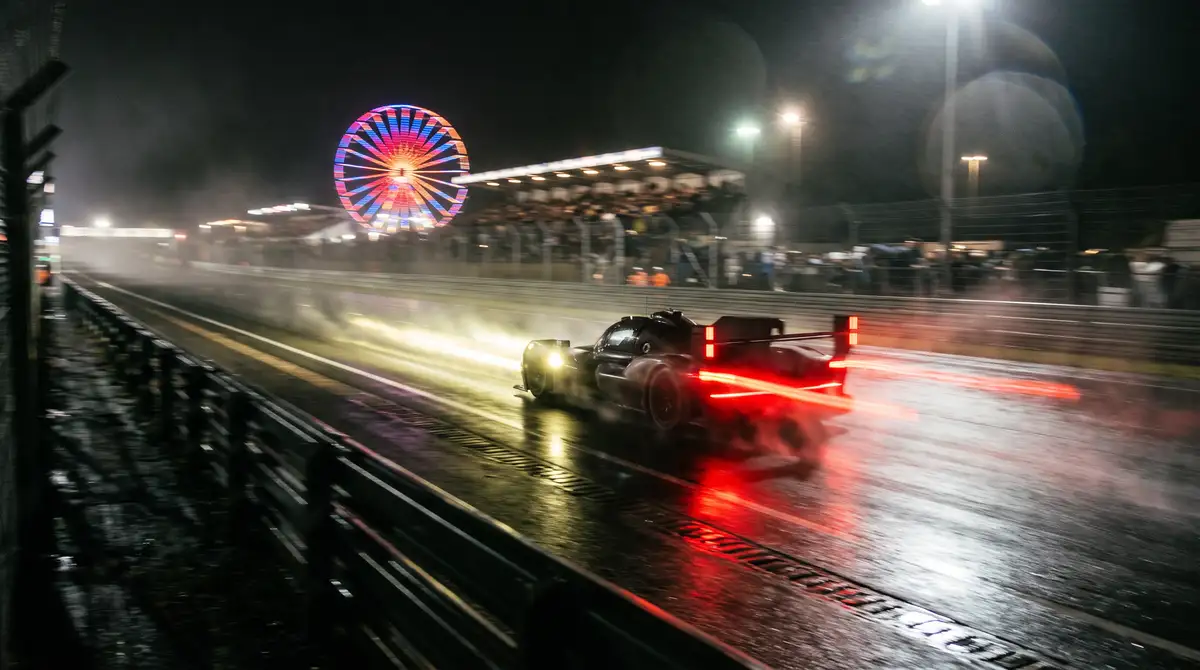
When it starts raining in Le Mans Ultimate, fitting wet tyres is only half of it. To see what else changes, we compared wet and dry setups setting by setting for all 28 official cars: 584 pairs, one per car and track.
What almost always changes
- Wet tyres: in 578 of the 584 wet setups.
- More traction control: in 260 of 584; less in only 15. The traction control power cut also goes up in 296.
- Softer rear anti-roll bar: in 164; stiffer in only 4.
- Softer rear springs: in 212; stiffer in only 5.
It all points the same way: with less grip, the rear needs to sit down more and spin less on the throttle.
Rear wing depends on the class
- LMP2: more wing in all 42 wet setups.
- LMP3: more wing in 78 of 80.
- LMGT3: more wing in 112 of 210.
- Hypercar: more wing in only 42 of 252. Almost all the rest keep the dry wing.
So does rear ride height
There is no single rule here. In LMP3 rear ride height goes up in 76 of 80 setups, and in LMP2 in 27 of 42. In Hypercar and LMGT3 it is rather the opposite: it goes down in 72 of 252 and in 80 of 210, and up in fewer.
What stays the same
The tyre pressure setting is the same dry and wet in all 584.
How we counted it: comparing the click of each setting in the setup file (.svm) of the stable race setup with the wet race setup, same car and track.