TECHNIQUE
How to Use Brake Bias in Sim Racing to Your Advantage in Every Corner
Brake bias is one of the most powerful and most ignored setup settings. Get it right and you gain stability under braking and tenths in every corner.
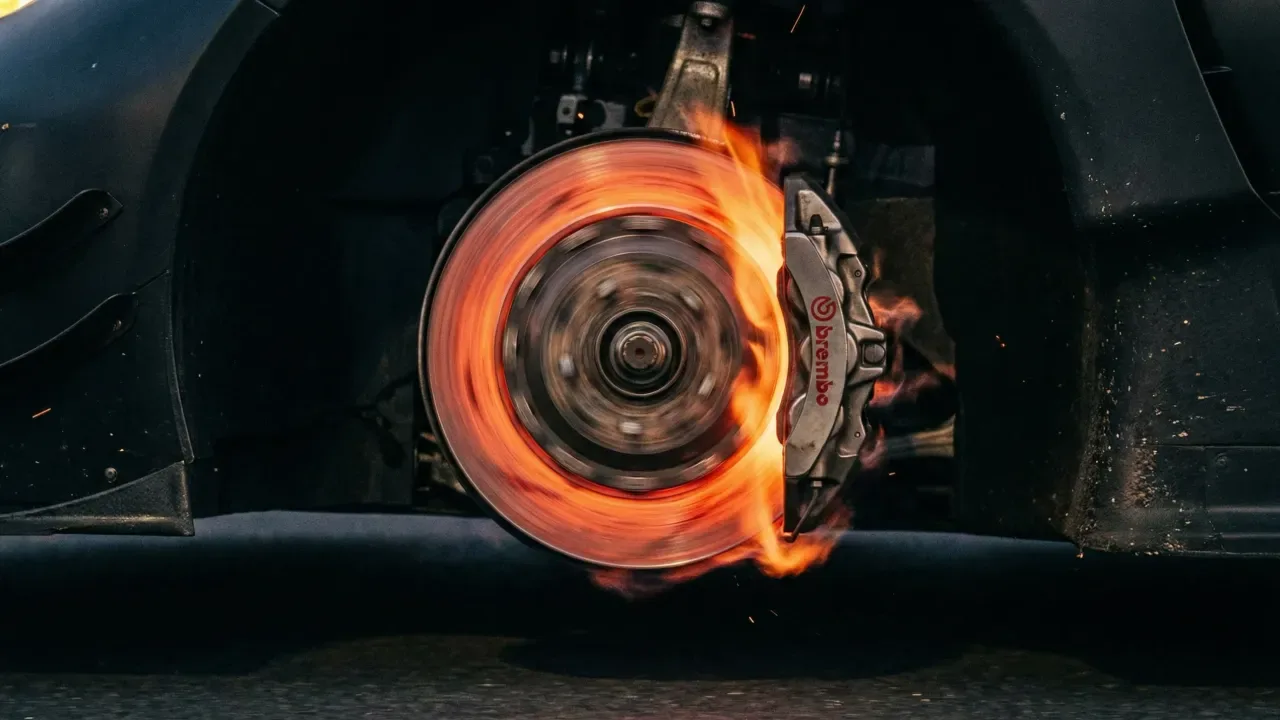
Brake bias determines what percentage of the braking force goes to the front axle and how much goes to the rear. In a race car, this setting can be adjusted from the cockpit during the race — and in sim racing, it's one of the most powerful settings you have at your disposal before heading out on track.
What brake bias actually does
When you brake, the car's weight shifts forward. If the bias is too far forward, the front brakes do more work than they should and the car tends to lock the fronts, losing steering. If it's too far rearward, the rear brakes lock first and the car becomes unstable, with a risk of spinning.
How to tell if your brake bias is wrong
- Front wheels lock under heavy braking → bias too far forward
- The car moves around or tries to rotate under braking → bias too far rearward
- You have to brake very gently to stay in control → bias badly unbalanced
- The car brakes well in a straight line but gets unsettled when braking into corners → it needs fine-tuning
Brake bias vs track
There's no universal brake bias. Tracks with lots of late, heavy braking zones like Monza or Spa need more front bias to handle the weight transfer. More technical tracks with medium braking zones and lots of linked corners, like the Nürburgring, can benefit from a more neutral or slightly rearward bias to keep the car stable when braking into corners.
The trick of adjusting brake bias during the race
In Assetto Corsa Competizione and in some AC cars, you can adjust the brake bias from the wheel during the race. This lets you adapt to changing conditions: more front bias when the rear tires are warm and have more grip, more rear bias when the fronts are worn.
Brake bias isn't a setting you set once — it's a tool you use throughout the race to adapt to changing conditions.
Advanced motorsport engineering
How telemetry helps you find the perfect brake bias
The most precise way to set your brake bias is with telemetry. Look for the front and rear brake pressure trace. If the fronts saturate (reach 100% pressure) before the rears, the bias is too far forward. If the rears saturate first, it's too far rearward. The goal is for both axles to be working at their maximum at the same time in the heaviest braking zones.