GUIDE
How to Make a Setup in Assetto Corsa: Step-by-Step Setup Guide
The order that works for building an Assetto Corsa setup: from tyre pressures to gearing, one change at a time, and how to tell if you've improved.

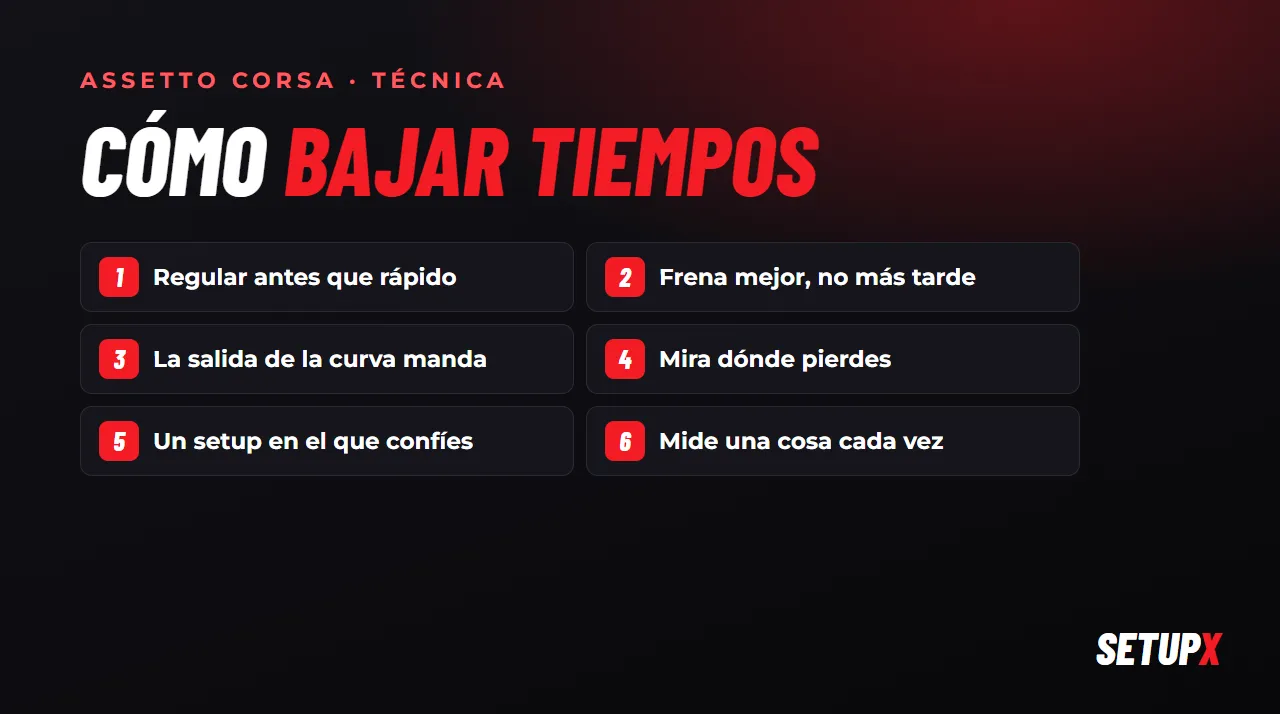
Making a setup isn't moving everything at once until the car “feels right”. It's following an order, changing one thing at a time and checking it against the stopwatch. This is the order that works for almost any car in Assetto Corsa.
Before you touch anything
- Drive on the default setup until your laps are similar to each other. If every lap is different, you won't know whether a change helps or it's just chance.
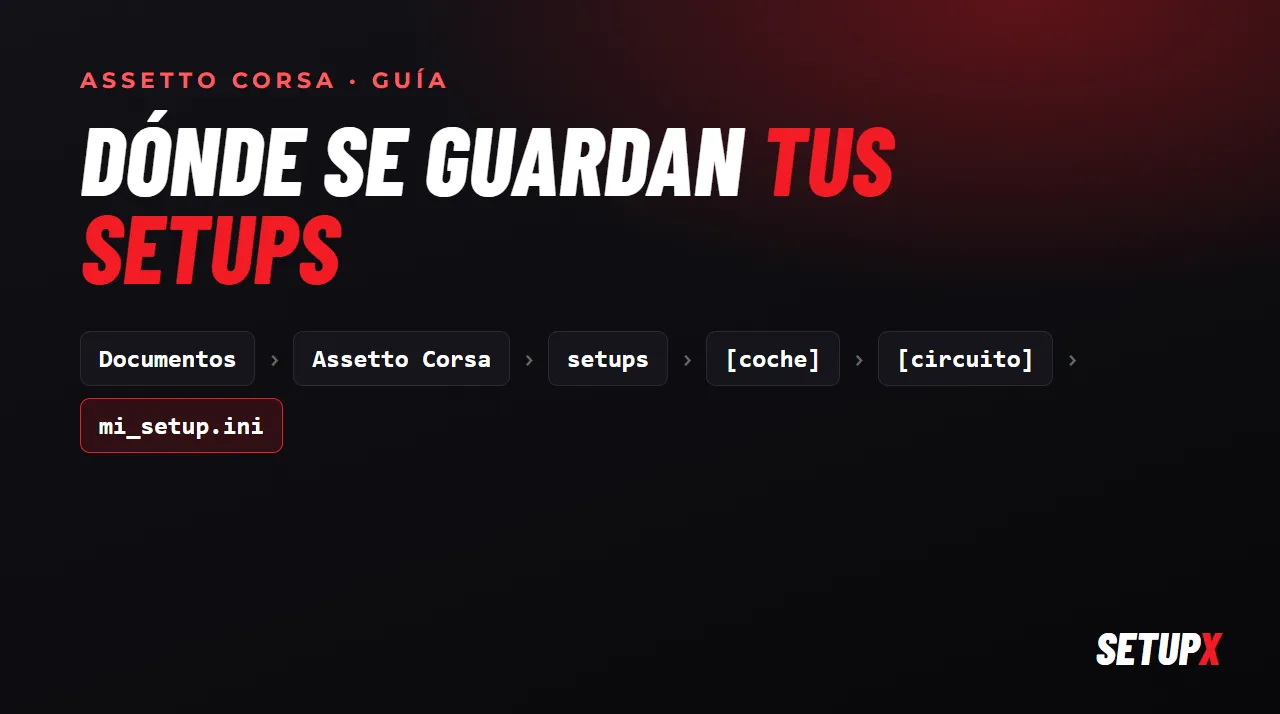
- Save a copy of the setup you're starting from, with a clear name.
- Pick a reference: your best lap or the average of your last five. Every change gets compared against that.
- Write down what the car does wrong and where: does it refuse to turn in to slow corners? Does the rear step out on the throttle? That's the problem you're going to solve.
The order of adjustments
1. Tyres: pressures
This comes first because it affects everything else. What matters is the hot pressure, after a few laps, not the one you set in the pits. Adjust until all four tyres are working in their window: not too soft (the car floats and overheats them) and not too hard (it slides).
2. Aero and ride height
On cars with wings, the split of downforce between front and rear decides the balance in fast corners. More rear wing gives stability at high speed but slows you down on the straights. Ride height and rake also change how much downforce the floor generates.
3. Springs and anti-roll bars
They define how the car leans on its tyres in corners. A stiffer front bar tends to add understeer; a stiffer rear bar, oversteer. Go a little at a time: one or two clicks, then test.
4. Dampers
They control how fast the car shifts its weight: under braking, when turning and on the throttle. They're what you notice most over kerbs and bumps. If the car bounces or takes a while to settle on corner entry, look here.
5. Geometry
Camber and toe change how much grip each tyre gives in corners and on the straights. We cover it in depth in the toe, camber and caster guide.
6. Differential, brakes and gearing
The differential sets how the driven wheels put the power down on the throttle and when you lift off. Brake bias shifts the balance under braking (how to use it). Gearing comes last: top gear should run out right at the end of the longest straight.
What to change for each problem
The car won't turn (understeer)
- Check the front pressures: if they're high when hot, lower them
- Softer front anti-roll bar
- More front wing or less rear wing
- If it happens under braking: move the brake bias slightly rearward
The rear steps out (oversteer)
- Softer rear anti-roll bar
- More rear wing
- If it happens on the throttle: less differential locking
- If it happens under braking: move the brake bias slightly forward
How to tell if you've improved
- One change at a time. If you change three things and go faster, you won't know which one did it.
- At least five laps with each change. One good lap can be luck.
- Look at consistency, not just your best lap. A setup that lets you repeat lap times is worth more in a race than one that gives you one fast lap out of ten.
- Use telemetry to see whether the change did what you wanted in the corner you wanted. We explain how in how to analyse your telemetry.